
Ahmedabad has a distinctive architectural identity. From the intricate wooden details of old pol houses to beautifully carved façades, courtyards, traditional materials, and shaded spaces, the city’s architecture carries stories that have been passed down through generations.
But modern Ahmedabad is changing. Families are moving into contemporary apartments, renovated bungalows, and luxury villas with a preference for clean lines, open layouts, modern materials, and smart technology.
Does that mean traditional architecture has to disappear?
Not at all.
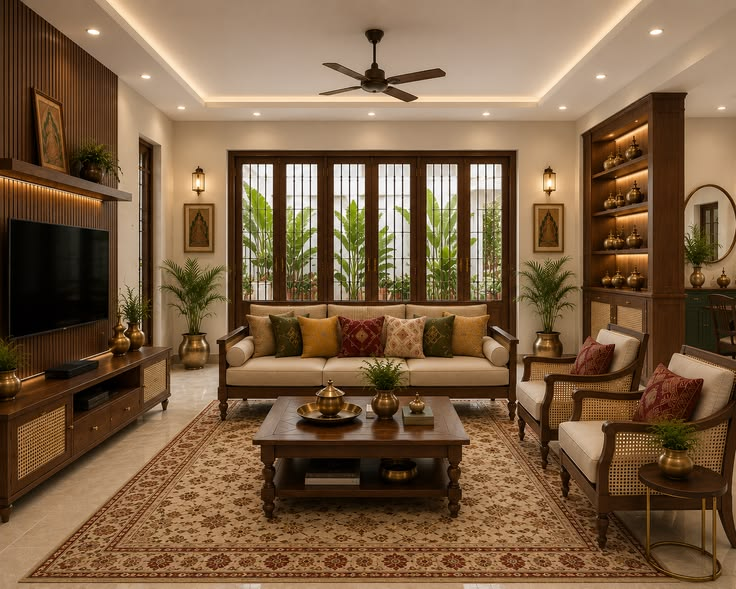
The most interesting interiors are often created when heritage and contemporary design are allowed to exist together. Instead of recreating an old home exactly as it was, designers can reinterpret traditional Ahmedabad elements in a way that feels fresh, elegant, and relevant to modern lifestyles.
At Veda Studio, we see this blend as an opportunity to create interiors that feel personal rather than predictable spaces that respect Ahmedabad’s architectural character while embracing the way people live today.
Why Ahmedabad’s Architectural Heritage Still Matters
Traditional Ahmedabad architecture wasn’t created only for decoration. Many of its features were responses to climate, privacy, community living, and everyday needs.
Elements such as:
- Wooden columns and carved details
- Internal courtyards
- Jali screens
- Traditional flooring
- Natural materials
- Shaded verandas
- Arched openings
- Handcrafted doors
- Earthy colour palettes
were part of a larger design language.
The challenge today is not simply to bring these elements back. It’s to understand why they worked and reinterpret them for contemporary homes.
The Art of Mixing Old and New
A common mistake when combining traditional and modern design is trying to give every element equal attention.
The result can feel visually confused.
Instead, think of the traditional elements as stories within a contemporary space.
A modern living room might feature clean furniture, minimal lighting, and a neutral palette, while one beautifully carved wooden panel becomes the focal point.
The contrast is what makes the space interesting.
A successful combination could include:
- Modern furniture + traditional wooden details
- Minimal walls + handcrafted artwork
- Contemporary lighting + antique furniture
- Modern flooring + heritage-inspired patterns
- Smart home technology + traditional craftsmanship
The goal isn’t to make a new home look old.
It’s to give a modern home a sense of history.
1. Bring Traditional Woodwork Into Modern Spaces
Wood has always played an important role in Ahmedabad’s traditional architecture.
Intricately carved doors, columns, brackets, and furniture can add warmth and character to an otherwise contemporary interior.
You don’t need to fill an entire room with carved wood.
Sometimes one carefully selected element is enough.
Try using traditional woodwork as:
- A statement entrance door
- A partition between living and dining areas
- A TV wall detail
- A headboard
- A decorative ceiling feature
- A console or sideboard
- A framed architectural panel
The contrast between detailed craftsmanship and simple modern furniture can create a sophisticated look.
2. Reinterpret the Traditional Courtyard
The courtyard, or chowk, is one of the most fascinating ideas found in traditional Indian homes.
It wasn’t simply an open space. It created a connection between rooms, allowed light and air to enter, and often became the social heart of the home.
Modern homes may not have enough space for a traditional courtyard, but the idea can still be adapted.
Contemporary interpretations include:
- Double-height central spaces
- Indoor gardens
- Skylit corners
- Internal balconies
- Small landscaped courtyards
- Central seating areas
The architecture may be modern, but the principle remains the same: bring people, light, and nature together.
3. Use Jali as a Modern Design Feature
Traditional jali work is another element that can transition beautifully into contemporary interiors.
Instead of using heavily decorative patterns everywhere, designers can reinterpret jali through simpler geometric forms.
Jali can be used for:
- Room dividers
- Staircase screens
- Balcony partitions
- Prayer areas
- Entryways
- Wardrobe shutters
- Decorative wall panels
Apart from adding visual interest, screens can create a sense of privacy while allowing light and air to pass through.
That’s traditional design serving a very modern purpose.
4. Let Craftsmanship Become the Statement
Modern interiors sometimes become overly dependent on mass-produced finishes.
Introducing handcrafted elements brings individuality back into the space.
A hand-carved wooden panel, locally crafted artwork, traditional textile, or artisanal décor piece can give a room a character that cannot be replicated by a catalogue.
Consider incorporating:
- Handcrafted furniture
- Local artwork
- Traditional textiles
- Artisan-made décor
- Hand-finished wood
- Regional craft pieces
The idea isn’t to turn the home into a museum.
It’s about giving craftsmanship a place within contemporary living.
5. Combine Traditional Materials with Modern Finishes
One of the easiest ways to create a balanced look is by mixing old-world materials with contemporary surfaces.
Imagine natural stone alongside sleek cabinetry.
Or warm wood against a clean plaster wall.
Or traditional flooring paired with modern furniture.
Interesting combinations include:
- Wood + glass
- Stone + metal
- Brass + contemporary cabinetry
- Traditional tiles + minimalist furniture
- Natural textures + polished surfaces
These contrasts create depth without making the interior feel overly traditional.
6. Create a Contemporary Colour Palette with Traditional Influences
Traditional Ahmedabad interiors often draw inspiration from natural and earthy colours.
Instead of copying an old colour palette exactly, designers can reinterpret those tones in a more contemporary way.
Consider:
- Warm beige
- Sand
- Terracotta
- Muted green
- Deep brown
- Ivory
- Soft ochre
- Charcoal
A neutral contemporary base can then be layered with one or two richer heritage-inspired tones.
This keeps the interior sophisticated without making it feel dated.
7. Traditional Architecture Can Also Inspire Modern Lighting
Lighting can help highlight heritage elements without overwhelming the contemporary character of the home.
A beautifully carved wooden wall, textured stone surface, or jali screen can become much more striking with carefully positioned lighting.
Consider using:
- Concealed LED strips
- Warm accent lighting
- Wall washers
- Pendant lights inspired by traditional forms
- Architectural lighting
- Soft floor lighting
The lighting should reveal craftsmanship rather than compete with it.
8. Don’t Forget Ahmedabad’s Climate
Traditional architecture often contained clever responses to Ahmedabad’s climate.
Shaded spaces, courtyards, ventilation, screens, and thick materials weren’t simply aesthetic choices—they helped create more comfortable interiors.
Contemporary homes can learn from these principles.
Modern adaptations can include:
- Solar-control window treatments
- Jali-inspired screens
- Cross ventilation
- Shaded balconies
- Natural materials
- Smart blinds
- Climate-responsive layouts
This is where traditional wisdom becomes especially valuable for modern design.
9. Modern Technology Can Coexist with Heritage
Traditional aesthetics don’t mean giving up modern convenience.
A home can have beautifully crafted wooden details while also featuring smart lighting, automated curtains, security systems, and integrated entertainment.
The key is concealment and integration.
Technology can be incorporated through:
- Hidden wiring
- Minimal switch panels
- Concealed speakers
- Automated blinds
- Smart lighting scenes
- Integrated security systems
The technology performs its job without becoming the visual focus.
10. Give Heritage a Personal Meaning
Not every traditional element belongs in every home.
The strongest interiors are selective.
Perhaps a homeowner has inherited an old wooden door from their grandparents.
Maybe they have a collection of traditional artwork.
Perhaps they grew up in an old Ahmedabad neighbourhood and want to bring a familiar architectural detail into their modern apartment.
These personal connections make the design meaningful.
Instead of asking, “What traditional elements can we add?”
Ask:
“Which part of our heritage actually means something to us?”
That’s where authentic design begins.
What to Avoid When Mixing Traditional and Contemporary Styles
Combining two design languages requires restraint.
Avoid:
- Using too many traditional motifs in one room.
- Mixing several unrelated wood finishes.
- Overdecorating walls.
- Copying heritage architecture without understanding its purpose.
- Using traditional elements only as decoration.
- Combining too many colours and patterns.
- Making every room follow the same theme.
A little contrast creates character.
Too much can create visual noise.
The Beauty of Contrast
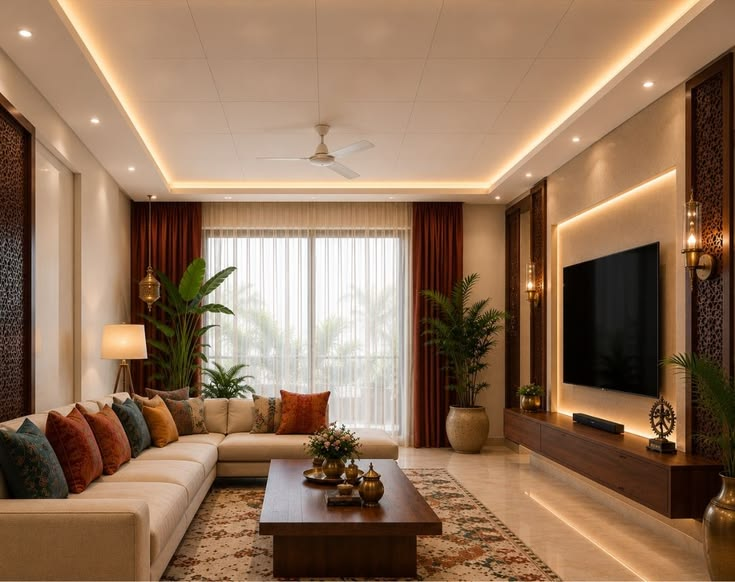
Perhaps the most beautiful thing about combining Ahmedabad’s heritage with contemporary interiors is the contrast.
An antique wooden chair against a modern wall.
A traditional jali beside minimalist furniture.
A handcrafted door opening into a contemporary living room.
Natural stone paired with sleek cabinetry.
These combinations create something that neither style could achieve alone.
The old gives the new character.
The new gives the old a fresh context.
Designing for the Next Generation
Preserving heritage doesn’t always mean preserving everything exactly as it was.
Sometimes preservation means allowing traditions to evolve.
A traditional architectural detail can be reinterpreted.
A family heirloom can become part of a modern living room.
An old material can inspire a contemporary finish.
A courtyard concept can become a modern light-filled space.
This approach allows cultural identity to remain relevant rather than becoming something that exists only in history books.
Final Thoughts
Ahmedabad’s architectural heritage offers an incredible source of inspiration for contemporary interiors. The goal isn’t to recreate the past or reject modern design. It’s to find the point where the two meet naturally.
When traditional craftsmanship, local materials, architectural principles, and personal stories are combined with modern planning, technology, and functionality, the result can be remarkably timeless.
At Veda Studio, we believe the most meaningful interiors are not defined by a single design style. They are shaped by the people, places, and stories behind them. By thoughtfully blending Ahmedabad’s architectural heritage with contemporary living, a home can feel modern without losing its roots.
Because the best contemporary spaces don’t forget where they came from they reinterpret it for the way we live today.