
A beautiful home can make you stop and look. A livable home makes you want to stay.
That difference is easy to overlook when designing an interior. We often save pictures of stunning living rooms, admire perfectly styled bedrooms, or imagine kitchens with flawless finishes. But once the design becomes real life, another set of questions appears. Is the sofa actually comfortable? Is there enough storage? Can two people move around the kitchen easily? Does the lighting work at night? Is there a place for all the things a family uses every day?
This is where thoughtful interior design begins.
At Veda Studio, we believe the most successful interiors exist somewhere between beauty and everyday life. A home should photograph beautifully, but it should also support morning routines, family dinners, quiet evenings, celebrations, workdays, and everything in between.
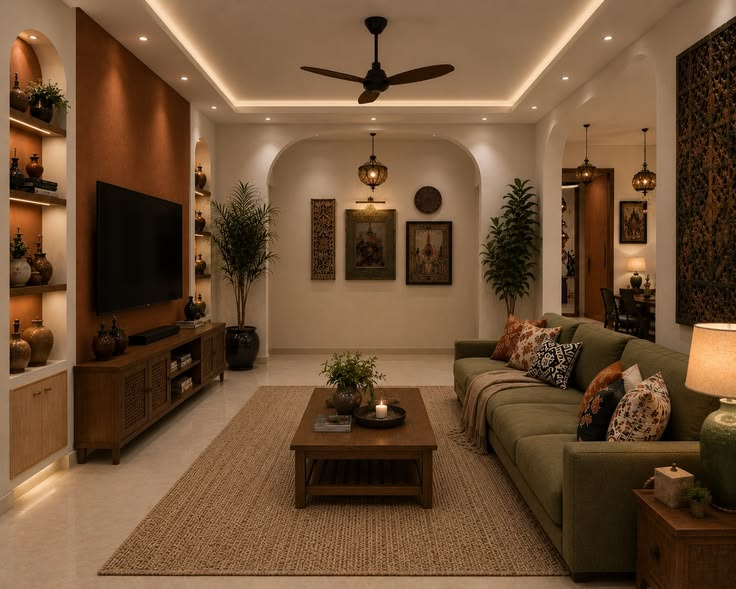
Beautiful Isn’t Always Livable
There is nothing wrong with wanting a beautiful home. In fact, aesthetics matter. The colours, materials, furniture, lighting, textures, and proportions of a space influence how we feel when we enter it.
The problem starts when appearance becomes the only goal.
A large designer sofa may look impressive but leave little room to move. Open shelving may create a clean visual effect but become difficult to maintain. A completely white kitchen may look sophisticated but require constant attention in a busy household.
A home isn’t a showroom.
It has to accommodate real people, real routines, and real life.
A livable interior should consider:
- How people move through the space
- How often each area is used
- Storage requirements
- Cleaning and maintenance
- Comfort and accessibility
- Natural light and ventilation
- Future lifestyle changes
The best design decisions are the ones that make everyday life feel easier without compromising the overall aesthetic.
What Does “Livable Luxury” Actually Mean?
Luxury has traditionally been associated with expensive materials, large spaces, and statement furniture.
But modern luxury is becoming more personal.
It’s having a kitchen where everything you need is within easy reach. It’s walking into a bedroom that feels peaceful after a long day. It’s having enough storage to keep your home visually calm. It’s controlling lighting without searching for multiple switches.
Livable luxury is about:
- Comfort without clutter
- Quality without unnecessary excess
- Functionality without sacrificing elegance
- Personalization without losing visual balance
- Technology that simplifies rather than distracts
The most luxurious home isn’t necessarily the one with the highest budget. It’s the one that understands how its occupants want to live.
Design Should Begin With How You Live
Before choosing a colour palette or furniture style, a good interior design process starts with questions.
- Who lives here?
- How do they spend their day?
- What do they enjoy doing at home?
- What frustrates them about their current space?
A family that hosts guests regularly will have different requirements from a couple who prefers quiet evenings. Someone who works from home needs a different layout from someone who spends most of the day outside.
Even small habits can influence design.
For example:
- A person who reads regularly may need a dedicated reading corner.
- A family that cooks frequently may need additional kitchen storage.
- Someone who works from home may need acoustic separation.
- A frequent traveller may need more luggage storage.
- A family with children may need durable, easy-to-maintain finishes.
These details may not appear in an inspiration image, but they are what make a home genuinely yours.
The Importance of Space Planning
One of the biggest differences between decoration and interior design is space planning.
A room can have beautiful furniture and still feel uncomfortable if the proportions and circulation aren’t considered.
Good space planning looks at:
- Furniture placement
- Walking paths
- Door openings
- Window access
- Storage requirements
- Room proportions
- Visual balance
- Relationship between spaces
Sometimes the solution isn’t adding something.
It’s removing something.
A slightly smaller sofa can make a living room feel significantly larger. A built-in cabinet can eliminate visual clutter. Moving a dining table by a few inches can improve circulation.
Good design often works quietly.
Storage Is Part of the Aesthetic
Storage is usually considered a functional requirement, but it also has a major impact on how a home looks.
Imagine two identical living rooms.
One has carefully planned concealed storage, while the other has everyday objects scattered across surfaces.
The furniture may be identical, but the second room will feel more chaotic.
Thoughtful storage can include:
- Full-height wardrobes
- Concealed cabinets
- Built-in shelving
- Under-bed storage
- Kitchen organizers
- Utility storage
- Hidden charging areas
- Dedicated spaces for seasonal items
The objective isn’t simply to create more storage.
It’s to make storage feel like part of the architecture.
Comfort Should Never Be an Afterthought
A chair can be beautiful and uncomfortable.
A mattress can look luxurious but feel wrong.
A dining table can look perfect but be inconveniently sized.
These details matter because interiors are experienced through the body, not just the eyes.
Think about:
- Seating depth
- Furniture height
- Mattress comfort
- Countertop height
- Lighting levels
- Temperature
- Acoustics
- Texture
When these elements are right, the space feels naturally comfortable without demanding attention.
Lighting Creates the Difference Between a House and a Home
Lighting is one of the easiest ways to change the character of a space.
A room shouldn’t have the same lighting throughout the day.
Morning may call for bright, natural illumination.
Work areas need focused light.
Evenings often benefit from warmer, softer lighting.
A layered lighting plan can include:
- Ambient lighting
- Task lighting
- Accent lighting
- Decorative lighting
- Natural daylight
The right combination creates flexibility while highlighting the architecture and materials of the room.
Materials Should Be Chosen for Real Life
A material can look beautiful in a sample book but behave very differently once it becomes part of a home.
Before choosing a finish, consider:
- How often it will be used
- How easy it is to clean
- How it responds to moisture
- How it ages
- Whether it can handle children or pets
- How much maintenance it requires
This doesn’t mean choosing the safest or simplest material every time.
It means choosing materials with intention.
Luxury becomes more meaningful when it lasts.
Personalization Is What Makes a Space Livable
A perfectly styled room can sometimes feel strangely impersonal.
That’s because good interiors aren’t only about design principles. They also need traces of the people who live there.
- A family photograph.
- A piece of artwork collected during travel.
- A favourite chair.
- Books on a shelf.
- An inherited piece of furniture.
- A handmade object.
These details don’t necessarily follow a trend, but they give a home its identity.
Your home shouldn’t look like a catalogue.
It should look like you.
Don’t Design for Instagram
Social media has changed the way we discover interiors.
It’s easier than ever to find beautiful inspiration. But a photograph captures one moment not the experience of living in that space.
Before copying a design trend, ask:
Will this work for my lifestyle?
Will I still like it in five years?
Is it comfortable?
Is it practical to maintain?
Does it solve a real problem?
If the answer is yes, it’s probably worth considering.
If not, let it remain inspiration.
Designing for the Future
A home shouldn’t only work for the person you are today.
Life changes.
Families grow. Work routines change. Children become teenagers. Parents may move in. Technology evolves.
A flexible interior can accommodate these changes without requiring a complete redesign.
Future-ready design may include:
- Adaptable rooms
- Flexible furniture
- Additional electrical points
- Smart home provisions
- Modular storage
- Multi-functional spaces
- Durable materials
Thinking ahead doesn’t make a home less personal.
It makes it more resilient.
The Sweet Spot Between Beauty and Function
The best interiors don’t force you to choose between aesthetics and practicality.
They make the two work together.
A beautifully designed wardrobe provides excellent storage.
A statement kitchen is also comfortable to cook in.
A sophisticated living room has enough space for people to actually gather.
A luxurious bedroom supports rest.
A stylish home office helps you focus.
That’s the space between beautiful and livable.
It’s where design stops being decoration and starts becoming part of everyday life.
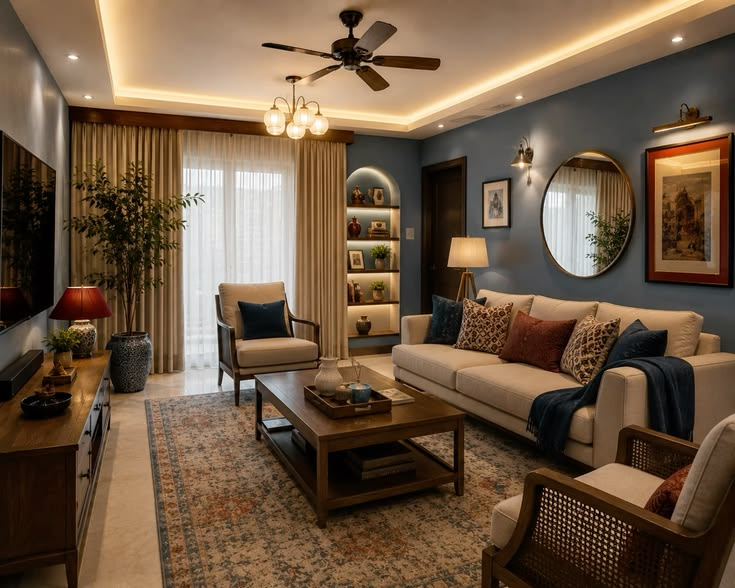
What Veda Studio Believes
At Veda Studio, we don’t believe that good interior design is about making a space look impressive at first glance.
We believe it is about understanding the people behind the space.
Their routines.
Their preferences.
Their aspirations.
Their challenges.
Their definition of comfort.
Every design decision should have a reason. The materials should support the lifestyle. The layout should make movement easier. The lighting should create the right atmosphere. Storage should reduce clutter. And the final space should still feel personal.
Because when beauty and functionality are considered together, the result isn’t simply a beautiful interior.
It’s a home that works.
Final Thoughts
There is a certain kind of beauty that only becomes visible after you have lived in a space for a while.
It’s the feeling of finding everything exactly where you need it.
It’s the comfort of a chair you naturally choose every evening.
It’s sunlight entering your favourite corner at the right time.
It’s having enough storage without seeing the storage everywhere.
It’s being able to host friends without rearranging your entire home.
These details may never become the star of an interior photograph, but they are what make a space truly successful.
Because the most beautiful home isn’t the one that looks perfect for a moment. It’s the one that feels right every day.